
Latest Articles
-
![]()

Case Study: The Smartest Person in the Room is the Room
by Ana MiglianoLearn how science consultant Eric Rhoades uses non-permanent vertical surfaces (VNPS) and Wipebooks to model collaborative sensemaking in educator workshops.
-
![]()

How to Use Reusable Flipchart Sheets in Classrooms in 8 Steps
by Justin LiendoLearn how to use reusable flipchart whiteboard sheets to create a more collaborative classroom. This step-by-step guide covers classroom setup, Building Thinking Classrooms strategies, visible thinking activities, student engagement, and tips for using and maintaining Wipebook Flipcharts.
- active learning strategies
- building thinking classrooms
- Classroom Collaboration
- classroom management tips
- classroom whiteboards
- collaborative learning
- dry erase flipcharts
- formative assessment strategies
- group problem solving
- math classroom activities
- reusable classroom resources
- reusable flipchart sheets
- reusable whiteboard sheets
- Student Engagement
- student-centered learning
- thinking classroom setup
- vertical non-permanent surfaces
- visible thinking strategies
- vnps
- whitebook
- wipebook
- Wipebook Flipcharts
-
![]()
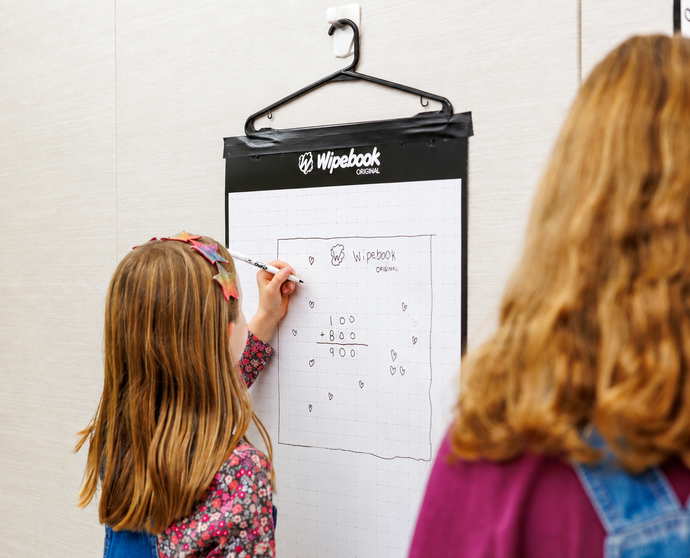
Simple Ways to Get More Out of Wipebook in the Classroom
by Justin LiendoLearn classroom-tested tips for using Wipebook workbooks, flipcharts, and reusable notebooks with students, from daily routines and marker care to storage, setup, and creative teacher hacks.
- BTC
- building thinking classrooms
- Classroom Collaboration
- Classroom Tips
- Dry Erase Classroom Tools
- Eco-Friendly Classroom
- Formative Assessment
- Math Instruction
- Mini Heavy-Duty Flipcharts
- Paperless Classroom
- Reduce Paper Waste
- Reusable Classroom Tools
- Reusable Notebooks
- Small Group Learning
- Student Engagement
- Sustainable Teaching Tools
- Teacher Resources
- Tutoring Tools
- Wipebook Best Practices
- Wipebook Flipcharts
- Wipebook Notebooks
- Wipebook Workbooks
- wipebooks
-
![]()

Book Study: Building Thinking Classrooms by Peter Liljedahl
by Andrew JorgensenIn 2003, Jane, a middle school math teacher, struggled with a new problem-solving curriculum, revealing that traditional teaching methods kept students busy but not truly thinking. Over 15 years, working with 400 K-12 teachers, 14 key factors were identified to foster deeper student engagement and thinking. Implementing specific practices such as using vertical non-permanent surfaces (VNPSs), random grouping, and dynamic workspaces led to the development of thinking classrooms where students actively engage in meaningful learning. These innovative methods break institutional norms, creating environments that promote sustained intellectual engagement and collaboration. -
![]()

Upgrading a Classroom by Using Wipebook
by Ana MiglianoThe addition of Wipebook Flipcharts into my classroom has been such an enjoyable experience for myself and the students. Being able to incorporate VNPS easily into exercises allows for a more engaged classroom and the experience of using the VNPS with their peers has blossomed an amazing community. -
![]()

Starting to Build a Thinking Classroom
by Ana MiglianoFrom the very first day I introduced the Flipcharts to my class, the students LOVED using them. They allowed students to be able to stand up, spread out and work in collaboration with their classmates. The students loved getting to work with partners in a new and exciting way.


Use left/right arrows to navigate the slideshow or swipe left/right if using a mobile device